What Are The Three Main Types Of Diagnostic Imaging?
September 11, 2025
Understanding Diagnostic Imaging
Diagnostic imaging is one of the most powerful tools in modern medicine. It allows doctors to look inside the body without surgery, giving them a clear picture of what’s happening beneath the surface. Think of it as the healthcare world’s version of “X-ray vision”, a way to uncover hidden conditions, guide treatment, and give patients peace of mind.
Before imaging technology, physicians relied heavily on physical exams and patient descriptions of symptoms. While that worked to some extent, it often left room for misdiagnosis or delayed treatment. Today, with advanced imaging machines, medical teams can detect issues in minutes that used to take weeks or never got discovered at all.
Why Imaging Matters in Modern Healthcare
If you walk into a clinic with sharp chest pain, your doctor won’t just guess what’s wrong. They’ll likely order an imaging test, an X-ray to check your lungs, a CT scan for your heart, or even an MRI if neurological symptoms appear. These images give precise, visual proof that helps confirm or rule out conditions.
Diagnostic imaging also helps track the progress of treatment. For instance, a cancer patient undergoing chemotherapy might have regular scans to monitor how the tumor is shrinking. In short, imaging isn’t just about finding problems, it’s about guiding solutions.
The Role of Technology in Accurate Diagnosis
Technology has dramatically improved imaging quality over the past few decades. Early X-rays were grainy, offering only rough outlines. Fast-forward to today, and we have machines that can capture 3D images of organs, detect microscopic changes in tissues, and even highlight brain activity in real time.
Each advancement means fewer missed diagnoses, more personalized treatments, and better patient outcomes. For communities like Gulfton, access to these modern technologies at places like NextGen Diagnostic Imaging ensures residents get the care they deserve without traveling far.
The Three Main Types of Diagnostic Imaging
When people hear “diagnostic imaging,” three main techniques dominate the conversation: X-rays, CT scans, and MRIs. Each serves a different purpose, and together they cover the vast majority of medical imaging needs.
X-rays
X-rays are the oldest and most widely used form of imaging. You’ve probably had one at some point whether it was for a dental checkup, a suspected fracture, or a chest scan.
How X-rays Work
X-rays use low doses of radiation to capture images of the inside of your body. When the rays pass through, dense objects like bones block them, appearing white on the final image. Softer tissues allow more rays through, showing up in shades of gray or black.
Common Uses of X-rays
- Bone fractures – The classic use, showing cracks or breaks in bones.
- Dental imaging – Spotting cavities, impacted teeth, or jaw issues.
- Chest conditions – Detecting pneumonia, tuberculosis, or lung cancer.
- Foreign objects – Especially helpful for children who swallow small items.
X-rays are quick, inexpensive, and often the first line of diagnostic testing. The downside is that they don’t show much detail in soft tissues, which is where more advanced scans come in.
CT Scans
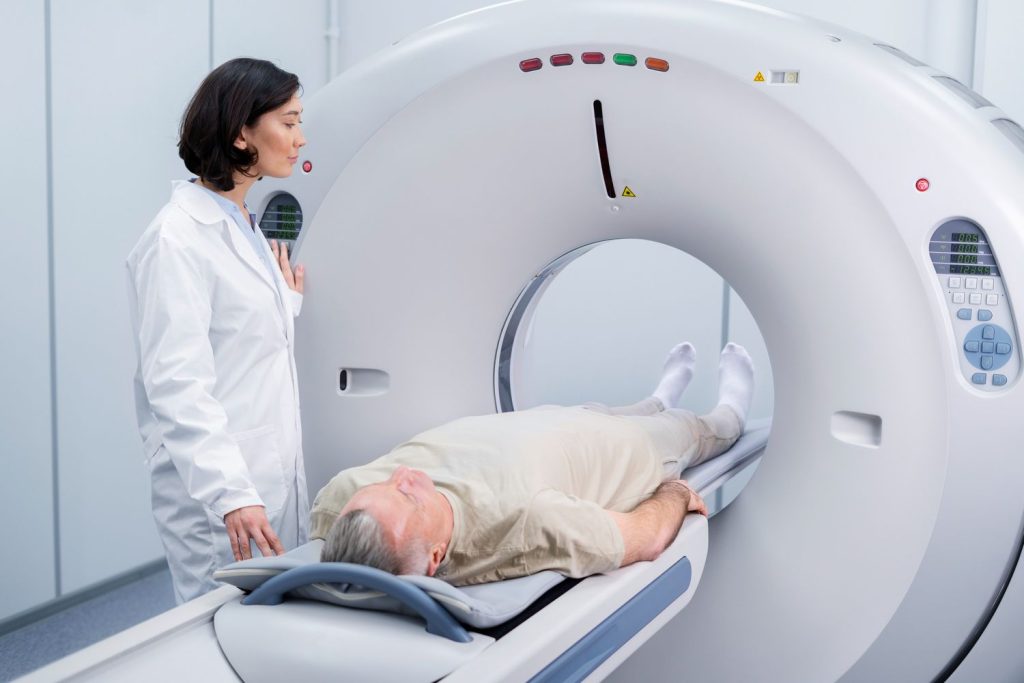
CT scans, short for computed tomography, are like an upgraded X-ray machine. Instead of producing a flat image, CT scans create cross-sectional pictures that can be combined into 3D models.
How CT Scans Work
The CT scanner rotates around your body, taking multiple X-ray images from different angles. A computer then compiles those images into detailed slices, which doctors can view layer by layer. This makes it much easier to detect small tumors, internal bleeding, or organ damage.
When Doctors Recommend CT Scans
- Cancer detection – Locating tumors and tracking how they respond to treatment.
- Trauma cases – Quickly identifying internal injuries after accidents.
- Heart disease – Assessing blockages in blood vessels.
- Abdominal pain – Pinpointing causes such as appendicitis, kidney stones, or liver disease.
CT scans are faster than MRIs and provide clearer images than standard X-rays, making them especially valuable in emergencies. The tradeoff is higher radiation exposure, which doctors weigh against the benefits.
MRI Scans
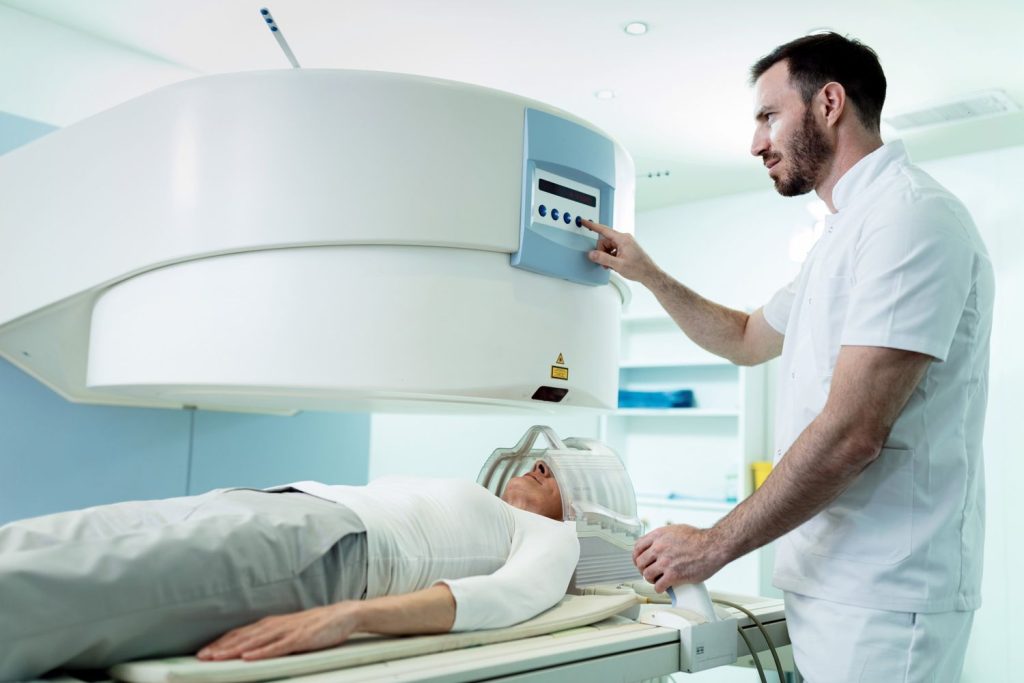
MRI, or magnetic resonance imaging, is the most advanced of the three. Unlike X-rays or CT scans, MRIs don’t rely on radiation. Instead, they use strong magnets and radio waves to generate images.
How MRI Works
When you’re inside the MRI machine, powerful magnets temporarily realign the hydrogen atoms in your body. Radio waves then send signals from those atoms back to the machine, which are translated into highly detailed images. This technique makes MRI particularly effective at showing soft tissues that X-rays and CT scans can’t capture well.
Benefits of MRI Scans
- Brain and spinal cord imaging – Perfect for detecting strokes, tumors, and multiple sclerosis.
- Soft tissue injuries – Spotting torn ligaments, cartilage damage, or herniated discs.
- No radiation – A safer option for patients who need repeated scans.
- Incredible detail – Especially valuable for complex diagnoses.
The main drawback? MRIs take longer and can be uncomfortable for patients who dislike tight spaces. Still, when accuracy is critical, MRI often provides answers no other scan can.
Comparing the Three Imaging Techniques
Each imaging type has strengths and limitations, making them useful in different situations.
Speed and Accessibility
- X-rays – Fastest and most widely available.
- CT scans – Relatively quick, usually completed in minutes.
- MRI – Longer, often 30–90 minutes per scan.
Accuracy and Detail
- X-rays – Best for bones and dense materials.
- CT scans – Excellent for organs, blood vessels, and tumors.
- MRI – Unmatched in soft tissue detail.
Costs and Insurance Coverage
X-rays are the most affordable, CT scans are moderately priced, and MRIs are the most expensive. Fortunately, many insurance plans cover these scans when medically necessary, especially if done at trusted centers like NextGen Diagnostic Imaging in Gulfton.
Diagnostic Imaging in Everyday Healthcare
Emergency Situations
Time is critical in emergencies. X-rays and CT scans are typically chosen first because they provide results within minutes, helping doctors make life-saving decisions quickly.
Chronic Illness Monitoring
Patients with cancer, heart disease, or neurological disorders often need regular scans. CT and MRI tests allow doctors to monitor disease progression and adjust treatments accordingly.
Preventive Screenings
Some imaging tests are used proactively, not just reactively. Mammograms (a specialized form of X-ray) catch breast cancer early, while CT scans can screen for lung cancer in high-risk patients. Preventive imaging can mean the difference between early treatment and late detection.
NextGen Diagnostic Imaging Near Gulfton
Why Patients Trust NextGen Diagnostic Imaging
When it comes to imaging, precision and care go hand in hand. NextGen Diagnostic Imaging in Gulfton is trusted for its advanced equipment, skilled technicians, and focus on patient comfort. Residents know they’ll receive accurate results without unnecessary delays.
Services Tailored to Gulfton Residents
From busy professionals needing fast appointments to seniors requiring ongoing monitoring, NextGen adapts to Gulfton’s diverse healthcare needs. The clinic’s goal is to combine modern technology with a community-focused approach, making high-quality imaging accessible to everyone.
Choosing the Right Imaging Option
Factors Doctors Consider
Physicians don’t choose tests at random. They weigh factors like:
- The patient’s symptoms
- The level of detail required
- The risks of radiation exposure
- The urgency of results
Questions Patients Should Ask
When your doctor orders a scan, don’t hesitate to ask:
- What will this scan show?
- Are there safer alternatives?
- How will the results affect my treatment?
- What should I expect during the test?
These questions ensure you stay informed and comfortable throughout the process.
The Future of Diagnostic Imaging
AI and Imaging
Artificial intelligence is changing the game. Algorithms can now analyze scans for early signs of disease, sometimes catching what the human eye misses. This technology promises faster, more accurate diagnoses.
Portable and Wearable Scanners
Imagine a world where you don’t need to visit a hospital for a scan. Portable and wearable imaging devices are already in development, making diagnostic care more accessible, especially in underserved communities.
NextGen Diagnostic Imaging Serving the Gulfton Community and Beyond in Houston
NextGen Diagnostic Imaging is dedicated to serving the diverse needs of the local community of Houston, including individuals residing in neighborhoods like Gulfton. With its convenient location near landmarks such as the Phoenix School of Massage and major intersections like 14th St. & Hillcroft Tc 1 Dr. (coordinates: 29.7212006072987, -95.49898765086479), we offer cheap diagnostic imaging centers Houston services.
Get Cheap Diagnostic Imaging Centers Services at Gulfton Now
Navigate from Gulfton to NextGen Diagnostic Imaging Now
Bringing Clarity to Modern Healthcare
Diagnostic imaging, whether it’s X-rays, CT scans, or MRIs forms the backbone of modern healthcare. Each type serves a unique role, helping doctors diagnose conditions quickly, accurately, and safely.
In Gulfton, NextGen Diagnostic Imaging provides residents with top-tier services, ensuring that patients get the answers they need without long waits or unnecessary stress.
These technologies don’t just save lives, they also bring peace of mind by offering clarity when health concerns arise.
FAQs
1. What are the three main types of diagnostic imaging?
The three most common are X-rays, CT scans, and MRI scans.
2. Which imaging scan is best for brain issues?
MRI scans provide the clearest images of the brain and spinal cord.
3. Can I eat or drink before a CT or MRI scan?
It depends on the type of scan. Some require fasting, while others don’t. Always follow your doctor’s instructions.
4. Do all imaging tests require a referral?
Most advanced scans, like CTs and MRIs, usually need a doctor’s referral to ensure they’re necessary.
5. Where can I get diagnostic imaging in Gulfton?
NextGen Diagnostic Imaging offers comprehensive imaging services with modern equipment and a patient-first approach.

NextGen Scans
Be part of a team driven by compassion and a commitment to putting patients first. At NextGen Scans, the care you provide has a meaningful impact every single day.
or Call us at
(346) 487-7037
What Imaging Centers Won’t Tell You About Wait Times
When you book an appointment at imaging centers, you may expect the visit to take only as long as the scan itself. That is not always the case. This can make it easier to manage your schedule and know what to expect during visits. Check-in, paperwork, preparation, equipment, staffing, and other patients can affect your…Your Pain Won’t Wait. Neither Should Your Ultrasound
When you’re dealing with pain, waiting can make every day harder. If you’re searching for a cheap ultrasound, price may be one of your first concerns. Yet the lowest price isn’t always the best value. You also need to consider imaging quality, staff experience, preparation requirements, and how results are handled. When comparing providers, ask…What Actually Happens During a Breast Ultrasound
Why Your Doctor May Recommend Breast Ultrasound A breast ultrasound creates detailed pictures of breast tissue using high-frequency sound waves. Doctors often recommend it after finding a lump, unusual pain, nipple discharge, or an area needing a closer look on a mammogram. It can also help show if a mass is fluid-filled or solid. If…

Contact Us: We’re Here to Help!
We’d love to hear from you! Whether you have questions about our services, need more information on our diagnostic and pain management options, or would like to schedule an appointment, our friendly and professional team is here to assist you every step of the way. We are dedicated to providing you with the best care and support, and we are happy to address any concerns or inquiries you may have.