Does A CT Scan Show A Concussion?
June 21, 2025
Understanding What a Concussion Really Is
Let’s kick things off by getting crystal clear on what a concussion actually is. It’s not a bruise you can see on the outside. A concussion is a mild traumatic brain injury (TBI) caused by a blow or jolt to the head or even a sudden movement that shakes the brain inside the skull. Think about your brain floating in fluid within your skull. If you slam on the brakes during a car ride, your body jerks forward and back—the same happens to your brain during a concussion.
While it may be called “mild,” a concussion is anything but trivial. The effects can linger for days, weeks, or even months.
Common causes include:
- Falls
- Sports injuries
- Car accidents
- Physical assaults
And here’s the thing: you don’t have to lose consciousness to have a concussion. In fact, most people don’t. That’s part of what makes them so sneaky.
What Happens Inside the Brain During a Concussion
On a microscopic level, a concussion disrupts normal brain function. When the brain is rapidly moved, the neurons—those tiny cells responsible for everything from thought to movement—can become overstretched or even damaged. This causes a sort of “electrical storm” in your head, disrupting the brain’s chemical and metabolic balance.
What you won’t see? Broken bones or torn tissues. What you might feel? A mix of disorientation, fatigue, or mood swings. It’s like trying to run your smartphone on 10% battery while all the apps are crashing.
Common Symptoms of a Concussion
Symptoms can range from obvious to surprisingly subtle. Here’s what people often report:
- Headache or pressure in the head
- Nausea or vomiting
- Dizziness or balance issues
- Blurred or double vision
- Confusion or “foggy” thinking
- Difficulty concentrating or remembering things
- Light and sound sensitivity
- Mood swings, irritability, or sadness
- Fatigue or drowsiness
Sometimes, symptoms appear right away. Other times, they creep in hours or even days later. That delayed reaction can make diagnosing a concussion tricky without a thorough evaluation.
What Is a CT Scan?
Now let’s break down what a CT scan actually is and why doctors often use it after a head injury.
CT stands for computed tomography. It uses X-rays taken from multiple angles and digital processing to create detailed cross-sectional images of the body. When you get a CT of your brain, you’re essentially getting a 3D image of your skull and brain tissue.
Compared to regular X-rays, CT scans are much more powerful and capable of detecting tiny structural issues.
How a CT Scan Works
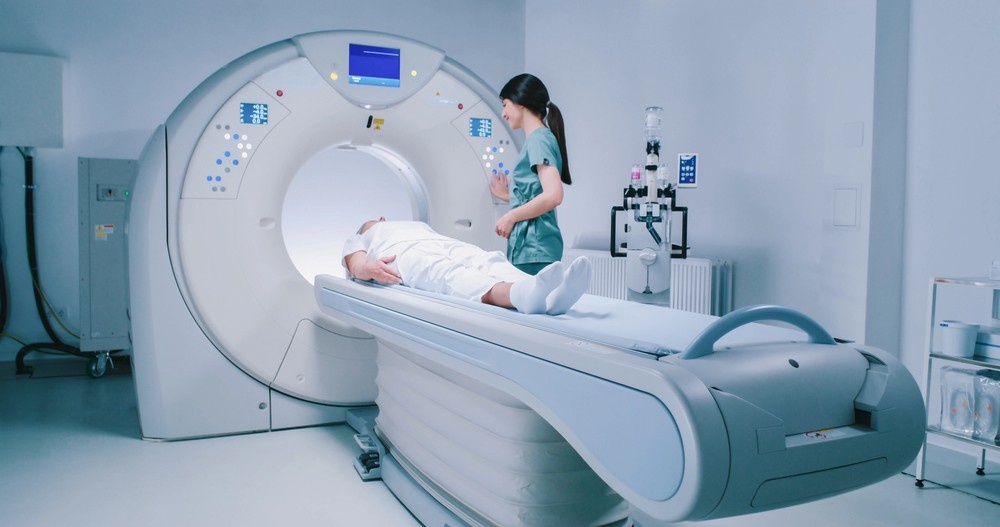
During a CT scan, you lie down on a table that slowly moves through a large, donut-shaped machine. The scanner rotates around your head, capturing images at various angles. These slices are compiled into a high-resolution picture that doctors can analyze almost immediately.
The process is fast—usually under 10 minutes—and painless. It’s often the first imaging test used in emergency situations because it’s quick and effective at spotting serious problems like bleeding or skull fractures.
Why CT Scans Are Commonly Ordered
Doctors use CT scans primarily to rule out life-threatening complications such as:
- Skull fractures
- Intracranial bleeding
- Swelling (edema)
- Brain herniation
In the ER, CT scans are a go-to when someone has:
- Lost consciousness
- Severe headache
- Vomiting after a head injury
- Slurred speech
- Seizures
- Confusion or disorientation
It’s all about ruling out the worst-case scenarios fast.
Does a CT Scan Show a Concussion?
Here’s the million-dollar question: Can a CT scan actually detect a concussion?
The short answer is: No, not usually.
Structural vs. Functional Damage
CT scans detect structural damage. That means they look for things that are visibly out of place: fractures, blood, swelling. But a concussion involves functional issues. It’s a disruption in how your brain cells work, not something that changes the way your brain looks.
So your CT scan might come back completely normal, even if you’re feeling absolutely wrecked by post-concussion symptoms.
What a CT Scan Can Detect
- Hemorrhages
- Contusions (bruises on the brain)
- Skull fractures
- Shifts in brain tissue
These are serious injuries and need immediate medical attention.
What a CT Scan Might Miss
- Neuronal damage
- Brain chemistry imbalances
- Tiny microbleeds
- Changes in brain activity
All of these are hallmark features of a concussion—and most won’t show up on a CT scan.
Alternative Imaging Options for Concussions
If CT doesn’t catch concussions, what can?
MRI vs. CT Scan for Brain Injuries
MRIs use powerful magnets and radio waves to create images. They’re better at visualizing soft tissues, so they can sometimes detect tiny changes or microbleeds that CT misses.
However, even MRIs often fail to pick up signs of a mild concussion. It might show inflammation or small anomalies, but for many, the scan looks normal.
What About Functional MRI (fMRI)?
fMRI tracks blood flow and brain activity. It can highlight areas of the brain that aren’t working right after trauma. This is promising but not yet widely used in standard care—more so in research settings or high-stakes evaluations like for athletes or military personnel.
When Should You Get a CT Scan After a Head Injury?
The key isn’t to get imaging just because you bumped your head. It’s about recognizing when symptoms point to something more serious.
The Role of Emergency Rooms and Immediate Evaluation
CT scans are incredibly useful in emergency care when doctors suspect a traumatic brain injury (TBI) that involves bleeding or swelling. Time is brain, and CTs are fast.
Red Flag Symptoms That Require Imaging
Call your doctor or go to the ER if you or someone else has:
- Repeated vomiting
- Loss of consciousness
- Seizures
- Difficulty speaking or walking
- Worsening headache
- Vision changes
- Personality changes
- Clear fluid draining from ears or nose
These could indicate a more dangerous injury needing immediate imaging.
The Importance of Medical Judgment
Imaging is just one part of the puzzle. Doctors also rely on:
- The Glasgow Coma Scale (GCS)
- Detailed physical exams
- Patient history
- Neurological testing
Why Imaging Isn’t Always Necessary
Most mild concussions don’t require a scan. If you’re alert, stable, and your symptoms aren’t worsening, your doctor may monitor you without imaging.
Clinical Concussion Diagnosis Tools
- Balance testing
- Cognitive assessments
- Eye tracking
- Reaction time tests
- Symptom scoring tools (like SCAT5)
These tools can detect functional impairments far better than a CT scan in many mild cases.
How NextGen Diagnostic Imaging Supports Brain Health
State-of-the-Art Technology
At NextGen Diagnostic Imaging, we use high-resolution, low-radiation CT and MRI technology. Our imaging systems are designed to offer fast and accurate results, ideal for assessing potential head injuries.
Trusted by Physicians in Houston and Beyond
We’re proud to be a go-to imaging partner for primary care doctors, neurologists, and emergency rooms across Houston. With rapid appointment scheduling and streamlined report delivery, NextGen helps get answers quickly when they matter most.
Whether your provider recommends a CT or MRI, we’re here to deliver trusted results with compassionate care.
NextGen Diagnostic Imaging Serving the Mahatma Gandhi District Community and Beyond in Houston
NextGen Diagnostic Imaging is dedicated to serving the diverse needs of the local community of Houston, including individuals residing in neighborhoods like Mahatma Gandhi District. With its convenient location near landmarks such as the Benavidez Elementary School and major intersections like Gulfton St. & Westward St. (coordinates: 29.716704099999987, -95.4938099), we offer cheap diagnostic imaging centers Houston services.
Get Cheap Diagnostic Imaging Centers Houston Services at Mahatma Gandhi District Now
Navigate from Mahatma Gandhi District to NextGen Diagnostic Imaging Now
Why Accurate Imaging Matters After a Head Injury
Does a CT scan show a concussion? Usually, no. A concussion is more about how your brain functions than how it looks. That said, CT scans are vital in ruling out more severe injuries after head trauma.
Understanding the limits and strengths of imaging helps patients and providers make smarter decisions. Trust your symptoms, and don’t dismiss how you feel just because a scan looks normal. For accurate, compassionate imaging services in Houston, turn to NextGen DiagnosticImaging. We bring expertise, speed, and care to every scan.
FAQs
1. Can a concussion be diagnosed without a CT scan?
Yes, most concussions are diagnosed based on symptoms and physical exams. Imaging is often unnecessary unless red flag symptoms are present.
2. How soon should I get a CT scan after hitting my head?
If you experience severe or worsening symptoms such as vomiting, confusion, or loss of consciousness, you should seek immediate medical attention and may need a CT scan.
3. Is MRI better than CT for detecting concussions?
MRI is more sensitive to soft tissue changes but still may not show evidence of a mild concussion. Neither scan guarantees detection.
4. What should I do if I have concussion symptoms but a normal scan?
Rest, monitor your symptoms, and follow up with your doctor. A normal scan doesn’t rule out a concussion.
5. Where can I get a CT scan in Houston?
NextGen Diagnostic Imaging offers safe, fast, and reliable CT scans at their Houston facility with easy scheduling and top-tier technology.

NextGen Scan
How X-Ray Services Help Doctors Make Fast Diagnoses
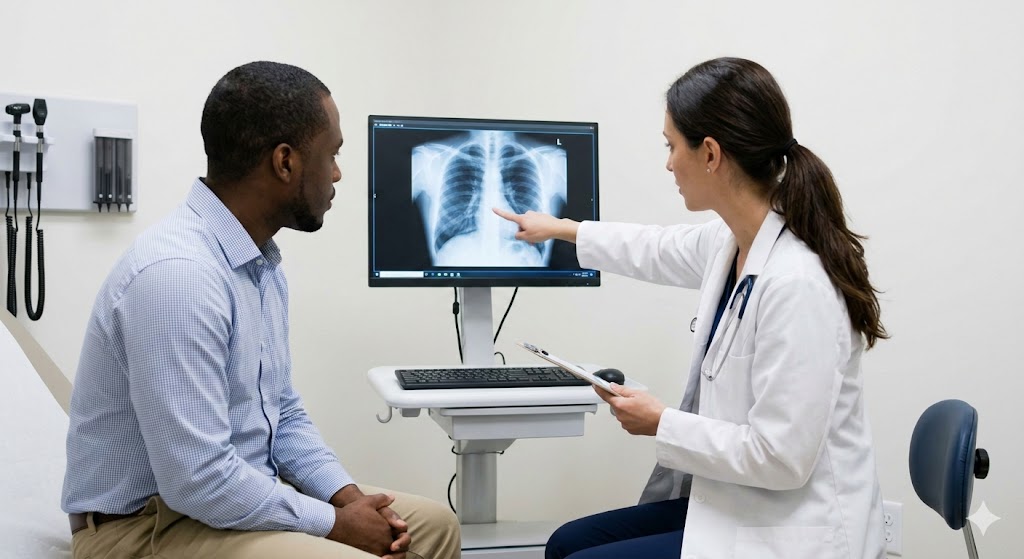
In healthcare, timing can be the difference between a minor concern and a major medical emergency. When symptoms appear—whether it’s sudden pain, shortness of breath, or an unexplained injury—doctors need answers quickly. This is where X-ray services step in as one of the most powerful diagnostic tools in modern medicine. For patients seeking X-ray services…What Are Mammogram Services And What Do They Include?
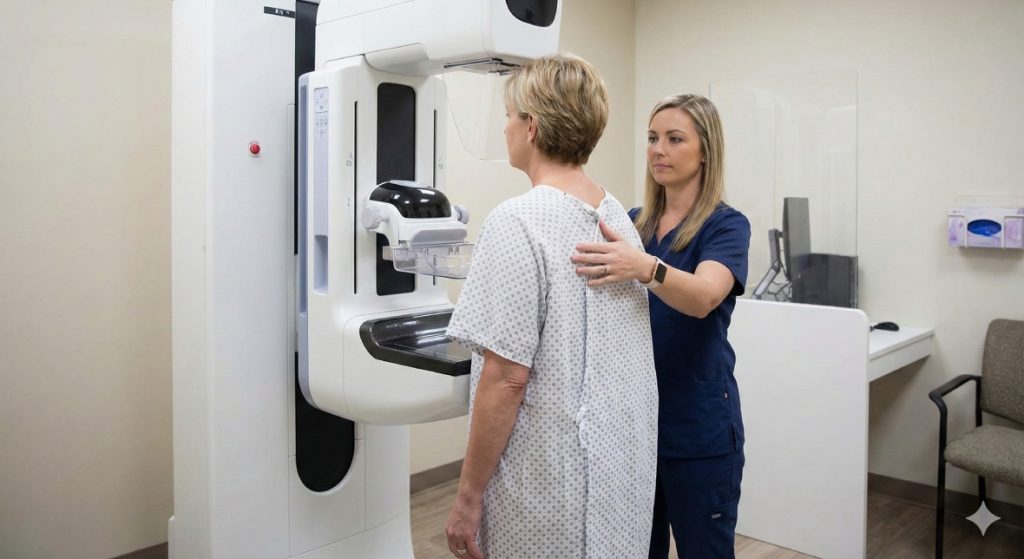
When it comes to protecting your long-term health, few screenings are as powerful—or as misunderstood—as a mammogram. Mammogram services are not just routine medical appointments; they are proactive tools that help detect breast changes long before symptoms appear. For women in Houston and Shenandoah, access to high-quality mammogram services can mean the difference between early…What Makes an Ultrasound Affordable Without Sacrificing Accuracy?
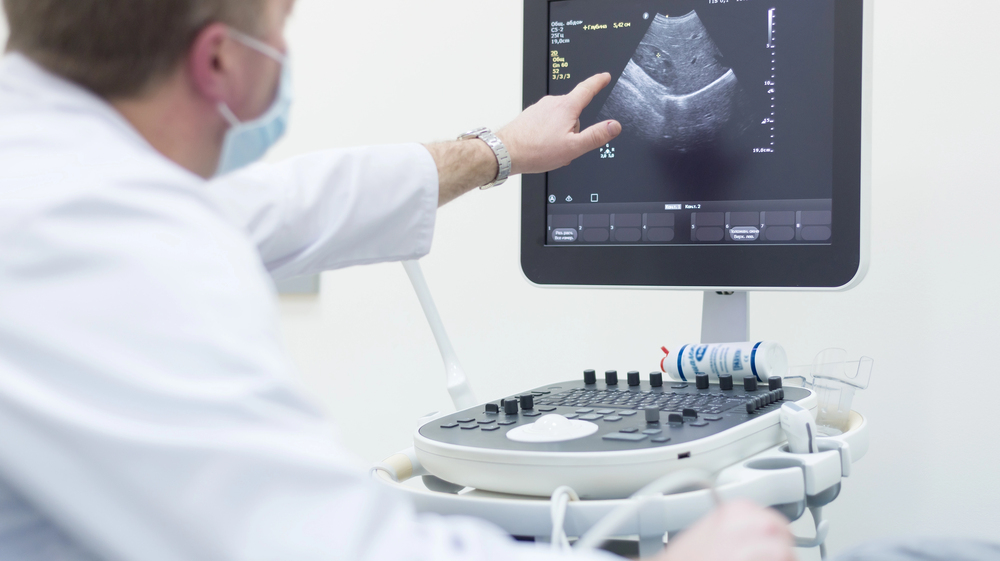
When patients hear that an ultrasound is “affordable,” the word often triggers doubt. In a healthcare system where prices vary wildly, many people assume lower cost must mean lower quality. After all, we’ve been trained to believe that better care always costs more. But diagnostic imaging doesn’t work that way. Ultrasound accuracy isn’t determined by…


Contact Us: We’re Here to Help!
We’d love to hear from you! Whether you have questions about our services, need more information on our diagnostic and pain management options, or would like to schedule an appointment, our friendly and professional team is here to assist you every step of the way. We are dedicated to providing you with the best care and support, and we are happy to address any concerns or inquiries you may have.