What Does A CT Scan Show In The Abdomen?
July 23, 2025
A CT scan of the abdomen is one of the most powerful diagnostic tools modern medicine has to offer. But if you’re sitting in the waiting room wondering what this scan will actually reveal, you’re not alone. So let’s dive in—without the medical jargon—into what a CT scan shows in the abdomen, how it works, what issues it can uncover, and what to expect when you visit NextGen Diagnostic Imaging for one.
Understanding CT Scans: The Basics
What Is a CT Scan and Why Is It So Important?
CT stands for computed tomography, which basically means “really detailed X-ray images.” Unlike regular X-rays that show flat images, a CT scan produces 3D images of the inside of your body. It uses rotating X-ray machines and advanced computer software to give doctors a layered view of your internal structures.
Why is that important? Because when you’re dealing with something as complex as the abdomen, you need more than just a guess. A CT scan allows doctors to see deep inside your body without making a single cut.
How It Works: A Peek Inside the Technology
Picture a slice of cake. Now imagine cutting that cake into super thin, perfect layers—each one revealing what’s inside. That’s what a CT scanner does with your abdomen. It takes multiple images in “slices” and then reconstructs them on a screen to give a full picture of what’s happening inside.
These slices can show:
- Bones
- Blood vessels
- Organs
- Soft tissues
- Abnormal growths
It’s fast, highly accurate, and painless. No wonder it’s used every single day in hospitals and imaging centers like NextGen Diagnostic Imaging.
What Can a CT Scan Detect in the Abdomen?
Organs Checked During an Abdominal CT Scan
When your doctor orders a CT scan of the abdomen, they’re looking at multiple major organs all packed into one space. These include:
Liver
CT scans can detect:
- Liver tumors (both cancerous and benign)
- Fatty liver disease
- Cirrhosis
- Liver cysts
- Inflammation
If bloodwork reveals abnormal liver enzyme levels, a CT scan gives visual confirmation.
Kidneys
Your kidneys may look fine from the outside, but a CT scan can find:
- Kidney stones
- Infections (like pyelonephritis)
- Tumors or cysts
- Structural abnormalities
- Blockages in the urinary tract
Pancreas
The pancreas is notoriously tricky to diagnose through physical exams or basic imaging. A CT scan can detect:
- Pancreatitis
- Pancreatic tumors
- Cysts
- Structural problems
Spleen
An often overlooked organ, the spleen can suffer from:
- Trauma or rupture (especially after accidents)
- Enlargement (splenomegaly)
- Abscesses or infection
Intestines and Colon
CT scans help detect:
- Bowel obstructions
- Inflammatory bowel diseases like Crohn’s or ulcerative colitis
- Diverticulitis
- Colon cancer
- Appendicitis
Other Conditions CT Scans Can Reveal
Tumors and Abnormal Growths
A CT scan is one of the most reliable methods to detect:
- Cancerous and non-cancerous masses
- Cysts
- Lymph node swelling
Even tumors that are difficult to feel or detect by ultrasound often appear clearly on CT.
Infections and Inflammation
If your body is fighting an infection deep in the abdominal cavity, a CT scan can reveal:
- Abscesses (pockets of pus)
- Inflamed organs
- Signs of sepsis spreading in soft tissue
Internal Bleeding
If you’ve suffered trauma—like a car accident or fall—a CT scan can quickly show where you’re bleeding internally, helping doctors respond fast.
Fluid Buildup (Ascites)
A CT scan reveals fluid that collects in the abdomen, often caused by:
- Liver disease
- Heart failure
- Cancer
- Infection
This helps guide treatment such as fluid drainage or further testing.
Special Types of Abdominal CT Scans
With Contrast vs. Without Contrast
Some CT scans use contrast dye (usually iodine-based) injected through an IV. It helps highlight:
- Blood vessels
- Tumors
- Inflammation
Without contrast, you still get good images of bones and organs, but certain abnormalities may not appear as clearly.
CT Angiography
This technique zooms in on blood vessels, often used when doctors suspect:
- Aneurysms
- Blood clots
- Artery blockages
It’s especially valuable for investigating abdominal aortic aneurysms, which can be life-threatening.
When Do Doctors Recommend an Abdominal CT Scan?
Ongoing or Sudden Abdominal Pain
If you’re having sharp pain in the lower right abdomen, doctors might suspect appendicitis. Upper right pain? Could be your gallbladder. A CT scan narrows it down in minutes.
Unexplained Weight Loss
Losing weight unintentionally, especially combined with fatigue or appetite loss, raises red flags. A CT scan checks for cancers, organ failure, or digestive blockages.
Chronic Digestive Problems
If symptoms like bloating, diarrhea, or constipation won’t go away, a CT scan can detect:
- IBS complications
- Tumors
- Narrowing of the intestines
- Enlarged lymph nodes
Fever Without a Known Cause
Doctors call this “fever of unknown origin.” A CT scan checks for:
- Abscesses
- Infected organs
- Complicated infections like diverticulitis or tuberculosis
Your Experience at NextGen Diagnostic Imaging
Before the Scan
Depending on the test, you may be asked to:
- Avoid eating or drinking for a few hours
- Wear comfortable clothing
- Remove jewelry or metal items
For contrast scans, an IV will be placed in your arm before the scan begins.
During the Scan
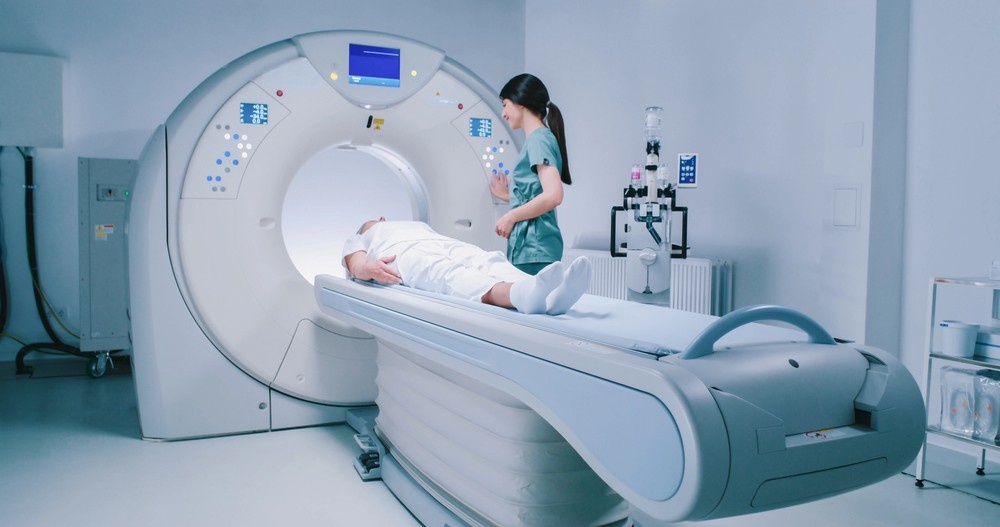
You’ll lie down on a flat table that moves into the CT scanner, which looks like a giant donut. It might hum or click, but you won’t feel a thing. Just lie still and follow breathing instructions if asked.
The entire process usually takes 15 to 30 minutes.
After the Scan
You can usually resume normal activities right away. If you received contrast, drink extra water to help flush it from your system. At NextGen Diagnostic Imaging, your results will typically be reviewed by a radiologist the same day or within 24–48 hours.
How Does a CT Compare to Other Imaging Tests?
CT vs. Ultrasound
Ultrasound is great for looking at fluid-filled structures like the gallbladder or during pregnancy. But for deeper organs, bones, or gas-filled intestines, CT scans are far superior.
CT vs. MRI
MRIs are better for soft tissues and spinal issues but take longer and cost more. CTs are:
- Faster
- Better in emergencies
- Easier for claustrophobic patients
When Is a CT Scan the Right Choice?
A CT scan is the gold standard when doctors need:
- Fast answers
- Detailed 3D views
- Whole-abdomen analysis
It’s especially useful after injuries, before surgeries, or when symptoms point to multiple possible conditions.
NextGen Diagnostic Imaging Serving the Sharpstown Community and Beyond in Houston
NextGen Diagnostic Imaging is dedicated to serving the diverse needs of the local community of Houston, including individuals residing in neighborhoods like Sharpstown. With its convenient location near landmarks such as the St. Luke’s United Methodist Church Gethsemane and major intersections like Bintliff Dr. & Sandpiper Dr. (coordinates: 29.703213873281435, -95.50416354671931), we offer x ray services Houston services.
Get X Ray Services Houston Services at Sharpstown Now
Navigate from Sharpstown to NextGen Diagnostic Imaging Now
The Value of Abdominal CT Scans in Early Diagnosis and Peace of Mind
What does a CT scan show in the abdomen? A lot. From tumors to infections to tiny stones, a CT scan is a window into the vital systems keeping your body running. If your doctor recommends one, rest easy knowing you’re in good hands—especially if you’re going to NextGen Diagnostic Imaging, where comfort, speed, and accuracy come first.
Don’t ignore abdominal symptoms. A CT scan could be the key to catching something early, getting relief, and taking control of your health.
FAQs
1. Can a CT scan detect all abdominal cancers?
It can detect most, but not all. Some early-stage cancers may need additional imaging or biopsies for confirmation.
2. Do I need contrast for every abdominal CT scan?
Not always. It depends on what your doctor is looking for. Tumors and blood vessels usually require contrast.
3. What does it feel like to get a CT scan?
You won’t feel the X-rays. It’s just lying still on a table. If contrast is used, you might feel a warm sensation.
4. Can children get abdominal CT scans?
Yes, but usually only when absolutely needed due to radiation exposure. Pediatric CT protocols use lower doses.5. How quickly will I get my results from NextGen Diagnostic Imaging?
In most cases, within 24–48 hours. For urgent issues, much faster.

NextGen Scan
How X-Ray Services Help Doctors Make Fast Diagnoses
In healthcare, timing can be the difference between a minor concern and a major medical emergency. When symptoms appear—whether it’s sudden pain, shortness of breath, or an unexplained injury—doctors need answers quickly. This is where X-ray services step in as one of the most powerful diagnostic tools in modern medicine. For patients seeking X-ray services…What Are Mammogram Services And What Do They Include?
When it comes to protecting your long-term health, few screenings are as powerful—or as misunderstood—as a mammogram. Mammogram services are not just routine medical appointments; they are proactive tools that help detect breast changes long before symptoms appear. For women in Houston and Shenandoah, access to high-quality mammogram services can mean the difference between early…What Makes an Ultrasound Affordable Without Sacrificing Accuracy?
When patients hear that an ultrasound is “affordable,” the word often triggers doubt. In a healthcare system where prices vary wildly, many people assume lower cost must mean lower quality. After all, we’ve been trained to believe that better care always costs more. But diagnostic imaging doesn’t work that way. Ultrasound accuracy isn’t determined by…


Contact Us: We’re Here to Help!
We’d love to hear from you! Whether you have questions about our services, need more information on our diagnostic and pain management options, or would like to schedule an appointment, our friendly and professional team is here to assist you every step of the way. We are dedicated to providing you with the best care and support, and we are happy to address any concerns or inquiries you may have.