What Is A Contrast CT Scan?
July 21, 2025
CT (computed tomography) scans have transformed the way doctors diagnose and monitor medical conditions. They provide detailed cross-sectional images of internal structures, offering far more detail than a standard X-ray. But in some cases, certain tissues or blood vessels don’t stand out clearly. This is where contrast material comes in.
A contrast-enhanced CT scan uses a special dye to help highlight areas of interest, providing clearer images that can support more accurate diagnoses. Whether it’s locating a hidden tumor or checking for internal bleeding, contrast makes it easier for radiologists to “see inside” the body in ways a regular scan cannot.
What Is a Contrast CT Scan?
A contrast CT scan is a diagnostic procedure that combines CT imaging with the use of contrast media—usually iodine-based liquids that improve image visibility. The contrast agent changes the way X-rays pass through different parts of the body, helping to create clearer, sharper images.
How the Contrast Works
When the contrast material enters the bloodstream or coats internal organs:
- It absorbs X-rays more than surrounding tissues.
- This makes certain areas appear brighter or more defined.
- The result: greater visual separation between normal and abnormal tissues.
This is essential when evaluating soft tissues, blood vessels, or organs where density differences are otherwise too subtle to detect.
Why Is Contrast Used in CT Scans?
Many anatomical structures appear similar on a plain CT scan, especially soft tissues. Contrast helps distinguish between them by enhancing the way they show up on the final image. Here’s why it’s used:
Improves Diagnostic Accuracy
- A contrast scan gives more reliable and precise results.
- Subtle lesions, tumors, or infections that might be missed on a regular scan become more noticeable.
Shows Organ Function
- For example, when examining kidneys, contrast shows how well they filter the material out of the bloodstream.
- Similarly, in the liver, it helps detect blockages or tumors based on how the contrast flows through the organ.
Highlights Blood Flow
- In vascular imaging, contrast helps doctors trace the path of blood through arteries and veins, identifying blockages, tears, or malformations.
Common Uses of Contrast CT Scans
Contrast CT scans are widely used in many medical fields. They allow healthcare professionals to explore a variety of symptoms and conditions with greater clarity.
1. Cancer Detection and Monitoring
Contrast-enhanced CT scans are vital in:
- Locating tumors or abnormal growths.
- Determining the exact size, shape, and spread of cancer.
- Tracking how well a tumor responds to treatment like chemotherapy or radiation.
2. Blood Vessel Imaging (CT Angiography)
When doctors suspect blood vessel issues, such as a blockage or aneurysm, they may order a CT angiography with contrast. This highlights:
- Coronary artery disease
- Carotid artery narrowing (linked to stroke)
- Abdominal aortic aneurysms
- Pulmonary embolism (a blood clot in the lungs)
These conditions often need quick diagnosis, and contrast CT makes that possible.
3. Evaluating Trauma and Internal Bleeding
In emergency settings, contrast CT scans can be life-saving. After an accident or fall:
- Contrast helps identify hidden internal injuries.
- Bleeding, organ lacerations, or ruptures appear more clearly.
- Doctors can act quickly, knowing exactly where the damage is.
4. Diagnosing Digestive Tract Conditions
When taken by mouth or enema, contrast helps doctors study the gastrointestinal system. It’s useful in diagnosing:
- Crohn’s disease
- Ulcers and perforations
- Tumors in the colon or intestines
- Intestinal blockages or twisted bowels
Oral contrast coats the lining of the GI tract, making it easier to spot abnormalities like inflammation or masses.
5. Neurological Conditions
Contrast CT scans of the head and brain are commonly used to assess:
- Brain tumors
- Swelling or inflammation
- Abscesses
- Blood-brain barrier disruptions
A stroke diagnosis, for example, can be enhanced with contrast to identify areas of reduced blood flow or bleeding.
Types of Contrast Agents Used
Different body systems and conditions call for different types of contrast. Here’s a breakdown:
1. Iodinated Contrast (IV)
- The most widely used.
- Quickly absorbed into the bloodstream.
- Excellent for imaging organs, vessels, and tissues.
- Typically used in chest, abdomen, and head scans.
2. Barium Sulfate (Oral/Rectal)
- Taken by mouth or rectum depending on the target area.
- Best for GI tract studies.
- It coats the lining of the esophagus, stomach, or intestines.
3. Air or Gas
- Occasionally used in virtual colonoscopy or CT enterography.
- Enhances contrast between tissues when other options aren’t suitable.
What to Expect During the Procedure
Knowing what to expect can ease concerns about the process. Here’s how a typical contrast CT scan goes:
Before the Scan
- Preparation depends on the type of scan.
- You may be asked to fast for several hours.
- If IV contrast is planned, your kidney function might be checked via a blood test.
- Let the technician know about any allergies or medications you’re taking.
During the Scan
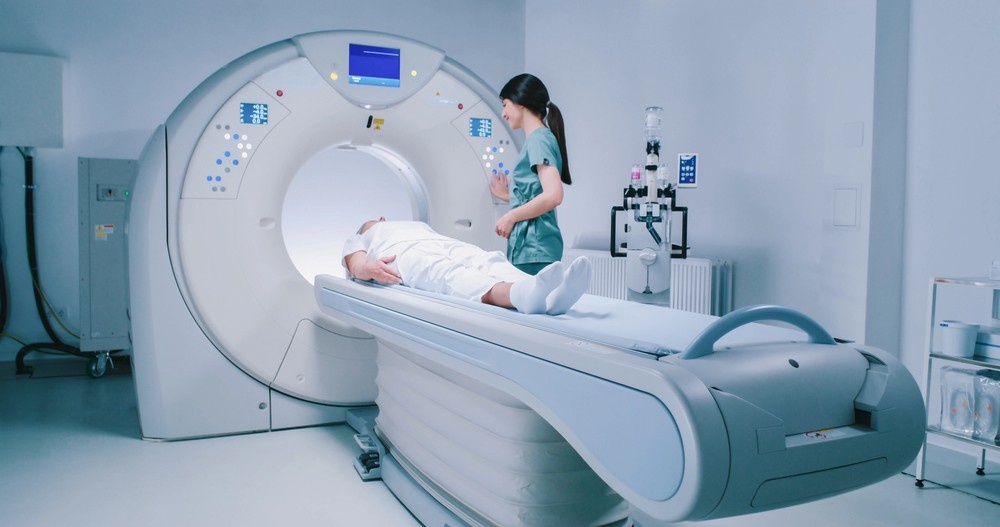
- You’ll lie on a table that moves slowly through the CT machine.
- If you’re getting IV contrast, a nurse or technician will place an IV line in your arm.
- As the contrast is injected, you might feel:
- A warm, flushed sensation
- A slight metallic taste
- Mild nausea (usually temporary)
The machine may ask you to hold your breath briefly while capturing images.
After the Scan
- You can usually return to regular activities.
- If contrast was used, it’s important to stay well-hydrated for the next 24 hours to help your body flush out the dye.
- Side effects are rare, but if you feel dizzy, itchy, or short of breath, seek medical attention.
Risks and Side Effects
While generally safe, contrast CT scans do carry some risk—especially for people with pre-existing health concerns.
Allergic Reactions
Most are mild, such as:
- Itching
- Rash
- Sneezing
- Mild swelling
Severe reactions like difficulty breathing or drop in blood pressure are rare but require immediate care.
Kidney Issues
Contrast agents are processed through the kidneys. Patients with:
- Chronic kidney disease
- Diabetes
- Recent chemotherapy
may be at increased risk for contrast-induced nephropathy (temporary or permanent kidney impairment). Kidney function tests are typically performed in advance.
Pregnancy Concerns
CT scans use radiation, so they are usually avoided during pregnancy unless absolutely necessary. If needed, your healthcare provider may opt for an MRI or ultrasound instead.
Contrast CT vs. Non-Contrast CT: What’s the Difference?
| Feature | Non-Contrast CT | Contrast CT Scan |
| Uses Dye | No | Yes (IV, oral, or rectal) |
| Visual Clarity | Limited in soft tissues | Enhanced detail in vessels and organs |
| Common Uses | Fractures, kidney stones, head trauma | Tumor detection, vascular issues, organ studies |
| Preparation Required | Minimal | May require fasting and hydration protocols |
Doctors will always determine which version is appropriate depending on your condition, medical history, and diagnostic needs.
How to Prepare for a Contrast CT Scan
Preparation varies depending on the type of contrast and body part being scanned, but here are general tips:
- Fasting: You might need to avoid food and drink for 4–6 hours.
- Medications: Some medications, like metformin, may need to be paused.
- Medical History Disclosure: Always let your provider know if you have kidney issues, allergies, or if you’re pregnant.
- Hydration: Drink water before and after to aid in flushing out the contrast material.
Following instructions closely can help prevent complications and ensure the best quality images.
NextGen Diagnostic Imaging Serving the Gulfton Community and Beyond in Houston
NextGen Diagnostic Imaging is dedicated to serving the diverse needs of the local community of Houston, including individuals residing in neighborhoods like Gulfton. With its convenient location near landmarks such as the Burnett Bayland Park and major intersections like Gulfton St. & Renwick Dr. (coordinates: 29.7212006072987, -95.48863214913519), we offer cheap x rays Houston services.
Get Cheap X Rays Houston Services at Gulfton Now
Navigate from Gulfton to NextGen Diagnostic Imaging Now
Conclusion
Contrast CT scans are a powerful extension of standard CT imaging. By adding contrast agents, doctors can get a clearer picture of what’s happening inside the body. Whether it’s for detecting a tumor, spotting internal bleeding, or evaluating blood flow, these enhanced scans offer greater diagnostic accuracy with relatively low risk. If you’re scheduled for a contrast CT scan, take comfort in knowing it’s a common, well-tolerated procedure. The detailed insight it provides can be key to getting the right diagnosis and treatment plan—early and with confidence.
FAQs
1. Can I see my CT scan results online?
Yes! Many imaging centers like NextGen offer secure portals where patients can view reports and images.
2. Is it normal to wait a few days for results?
Totally normal—most non-emergency scans take 1–3 business days.
3. Who reads my CT scan results?
A certified radiologist interprets your scan and shares a report with your doctor.
4. What should I do if I haven’t heard back after 3 days?
Call your doctor or the imaging center to check if the results have been reviewed.
5. Does NextGen Diagnostic Imaging do same-day CT results?
In urgent cases, yes. With in-house radiologists and digital systems, NextGen can often turn around reports within a few hours.

NextGen Scan
How X-Ray Services Help Doctors Make Fast Diagnoses
In healthcare, timing can be the difference between a minor concern and a major medical emergency. When symptoms appear—whether it’s sudden pain, shortness of breath, or an unexplained injury—doctors need answers quickly. This is where X-ray services step in as one of the most powerful diagnostic tools in modern medicine. For patients seeking X-ray services…What Are Mammogram Services And What Do They Include?
When it comes to protecting your long-term health, few screenings are as powerful—or as misunderstood—as a mammogram. Mammogram services are not just routine medical appointments; they are proactive tools that help detect breast changes long before symptoms appear. For women in Houston and Shenandoah, access to high-quality mammogram services can mean the difference between early…What Makes an Ultrasound Affordable Without Sacrificing Accuracy?
When patients hear that an ultrasound is “affordable,” the word often triggers doubt. In a healthcare system where prices vary wildly, many people assume lower cost must mean lower quality. After all, we’ve been trained to believe that better care always costs more. But diagnostic imaging doesn’t work that way. Ultrasound accuracy isn’t determined by…

Contact Us: We’re Here to Help!
We’d love to hear from you! Whether you have questions about our services, need more information on our diagnostic and pain management options, or would like to schedule an appointment, our friendly and professional team is here to assist you every step of the way. We are dedicated to providing you with the best care and support, and we are happy to address any concerns or inquiries you may have.