When Can You See Pregnancy On Ultrasound?
June 27, 2025
Ever wondered exactly when you can see a pregnancy on an ultrasound screen? It’s one of the most common—and emotional—questions expectant parents ask. The truth is, that tiny speck of new life doesn’t show up right away. But with the right timing and a bit of guidance, the ultrasound becomes a window into your baby’s first days.
At NextGen Diagnostic Imaging, we help patients navigate the early weeks with confidence and clarity. If you’re anxiously awaiting that first glimpse, you’re in the right place.
Understanding Early Pregnancy and Ultrasound Timing
What Happens After Conception?
Let’s rewind for a second. Conception is when a sperm fertilizes an egg. This usually happens around two weeks after the first day of your last period. But here’s the kicker—your pregnancy is calculated from your last menstrual period (LMP), not from the day of conception.
So when you’re “4 weeks pregnant,” you’ve technically been pregnant for about two weeks.
How Pregnancy Is Measured in Weeks
Pregnancy weeks are measured from that LMP date, making it easier for doctors to estimate milestones and due dates. But this can be confusing when you’re waiting to see something on the ultrasound. You might feel pregnant, but the image may not show anything—yet.
The First Ultrasound: What to Expect
Why You May Need an Early Scan
Many patients come in for early ultrasounds due to:
- Uncertainty about their last period
- Symptoms like spotting or pain
- A history of miscarriage or ectopic pregnancy
- Pure excitement and curiosity!
Common Signs That Prompt Early Imaging
If your OB-GYN orders a scan at 5–6 weeks, don’t panic—it’s standard in many cases. Spotting, pelvic pain, or IVF treatment often prompt a closer look at what’s going on inside.
Types of Ultrasounds Used During Pregnancy
Transvaginal vs. Abdominal Ultrasound
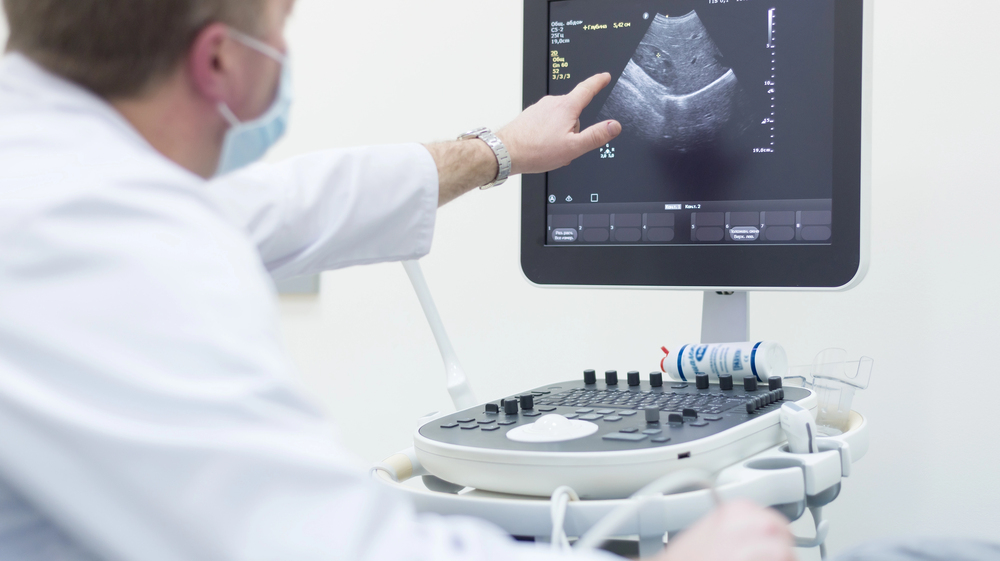
Your first scan will likely be a transvaginal ultrasound. This type involves a small probe inserted into the vagina. Sounds intimidating? It’s actually quite painless and provides the clearest view in early pregnancy.
By contrast, abdominal ultrasounds are external and typically used in later weeks—once the pregnancy is bigger and easier to detect.
When Each Method Is Used
- Weeks 4–7: Transvaginal is best
- After Week 8: Abdominal may be enough
- Later stages: Abdominal becomes the go-to option
Ultrasound Milestones: Week-by-Week Breakdown
Now the good stuff. Here’s a detailed week-by-week guide to what you can expect to see on an ultrasound during early pregnancy, especially during those nerve-wracking (and magical!) first 10 weeks.
Week 4–5: Gestational Sac
This is the very first visible sign of pregnancy on an ultrasound, often seen around the end of week 4 or early week 5. It looks like a small, fluid-filled black circle nestled inside the uterine lining. This sac is where your embryo will soon develop.
At this stage:
- It confirms that the pregnancy is located inside the uterus—important for ruling out an ectopic pregnancy.
- It’s normal not to see the baby or yolk sac yet—they’re simply too small.
- The gestational sac diameter might be measured to help date the pregnancy if your LMP is unclear.
Pro tip: If your hCG levels are above 1500 mIU/mL and the gestational sac is not seen, further investigation may be needed.
Week 5–6: Yolk Sac and Early Embryo
By this time, the yolk sac should make its debut—another small round structure inside the gestational sac. It serves a crucial role: feeding the embryo in the earliest days before the placenta develops.
You may also see the fetal pole, which is essentially the developing embryo. It’s a small, bean-shaped structure that begins to form along the wall of the gestational sac.
At this point:
- The yolk sac confirms the pregnancy is viable and not a blighted ovum (a sac with no embryo).
- Sometimes, the fetal pole is too small to measure just yet, but it might be visible as early as 5.5 weeks.
- Your provider might schedule a follow-up scan in a week to monitor progress.
What to expect: If everything’s progressing normally, your sonographer at NextGen Diagnostic Imaging will explain what each structure means and give you a sense of your baby’s timeline.
Week 6–7: Fetal Pole and Heartbeat
This is when things really start to feel real. The fetal pole is now more visible, and the most exciting moment might happen: seeing your baby’s heartbeat for the first time!
What’s visible and measurable:
- The fetal pole can usually be measured using crown-rump length (CRL) to date the pregnancy.
- The heartbeat appears as a flickering motion and is sometimes audible, especially with sensitive equipment.
- Normal fetal heart rates range between 90–110 bpm at 6 weeks, climbing to around 150–170 bpm by week 8.
Important note: Don’t panic if there’s no heartbeat at exactly 6 weeks. If your dates are off or implantation happened late, it might take until 6.5–7 weeks to detect it.
At NextGen Diagnostic Imaging, early pregnancy ultrasounds are conducted with high-resolution, transvaginal imaging to capture these subtle developments.
Week 8–10: More Details Begin to Show
Now your baby’s growth really kicks into gear! By week 8, that indistinct fetal pole begins transforming into a recognizable tiny human with defined structures.
Here’s what typically appears:
- Limb buds (arms and legs) start to sprout.
- The head becomes more prominent, with early signs of brain development.
- The spine and umbilical cord are sometimes distinguishable.
- You might even notice subtle movements, although you won’t feel them yet.
- The heartbeat is now strong, consistent, and easily measurable.
The embryo at 8 weeks is around 1.6 cm long, and by week 10, it’s closer to 3–4 cm.
During this stage:
- A “dating ultrasound” is often performed to establish an official due date.
- Multiple pregnancies (twins or more!) are usually identifiable.
- The placenta begins to develop and may be visible.
By week 10, your embryo is now officially called a fetus—a major milestone! From this point on, growth accelerates and the chances of miscarriage drop significantly.
What If You Don’t See Anything Yet?
Is It Too Early? Or Is There a Concern?
Don’t hit the panic button just yet.
If your scan doesn’t show much (or anything), it could simply mean you ovulated later than you thought. Even a few days off can make a big difference early on.
However, your provider will want to rule out:
- Miscarriage
- Ectopic pregnancy
- Blighted ovum (a sac with no embryo)
They may repeat your scan in 7–10 days or check your hormone levels to get a clearer picture.
HCG Levels and Ultrasound Accuracy
Human chorionic gonadotropin (hCG) is a hormone that rises in early pregnancy. Generally:
- hCG > 1500–2000 mIU/mL = gestational sac should be visible
- hCG > 6000 mIU/mL = heartbeat might be detectable
But every body—and every pregnancy—is different.
Why Ultrasound Timing Matters
Dating the Pregnancy Accurately
Your doctor uses measurements from the ultrasound to estimate how far along you are, especially if your periods are irregular. That measurement is called the crown-rump length (CRL).
It’s the gold standard in early dating.
Ruling Out Ectopic Pregnancy
An early ultrasound can confirm that your pregnancy is inside the uterus—and not growing in a fallopian tube (which is dangerous).
NextGen Diagnostic Imaging uses high-resolution imaging to spot potential concerns early and accurately.
What to Ask Your Imaging Center
Choosing a Reliable Clinic Like NextGen Diagnostic Imaging
You want more than just a fuzzy black-and-white screen. At NextGen Diagnostic Imaging, we use the latest ultrasound technology and expert sonographers to give you a clear, compassionate experience.
We help answer questions like:
- “Is this normal for my week?”
- “Why can’t I see the baby yet?”
- “What happens next?”
Questions to Ask at Your First Visit
- What type of ultrasound will I get?
- How far along do I seem based on the scan?
- Can we confirm the pregnancy location?
- When should I come back for another scan?
These questions help you feel more in control—and less anxious—during the early weeks.
NextGen Diagnostic Imaging Serving the Mahatma Gandhi District Community and Beyond in Houston
NextGen Diagnostic Imaging is dedicated to serving the diverse needs of the local community of Houston, including individuals residing in neighborhoods like Mahatma Gandhi District. With its convenient location near landmarks such as the Benavidez Elementary School and major intersections like Gulfton St. & Westward St. (coordinates: 29.716704099999987, -95.4938099), we offer ultrasound centers Houston.
Get Ultrasound Centers Houston at Mahatma Gandhi District Now
Navigate from Mahatma Gandhi District to NextGen Diagnostic Imaging Now
Capturing the Earliest Moments of New Life
Pregnancy might begin with a positive test, but the real magic starts with that first ultrasound. Whether it’s a tiny dot on the screen or a strong flickering heartbeat, the experience is unforgettable.
Just keep in mind, the timing matters. If you go too early, you might not see much—and that’s okay. Waiting even one extra week can make all the difference in clarity. When in doubt, trust your care team and imaging experts. At NextGen Diagnostic Imaging, we’re here to guide you through every pixel of this incredible journey.
FAQs
1. Can I see pregnancy at 3 weeks on ultrasound?
Nope, it’s too early. Even with advanced ultrasound, there’s usually nothing visible until at least 4.5–5 weeks.
2. When is the best time for the first ultrasound?
Around 6–8 weeks is ideal for most people. You’ll likely see the gestational sac, yolk sac, embryo, and possibly a heartbeat.
3. What if the ultrasound shows no heartbeat at 6 weeks?
It might still be too early. Your provider may recommend repeating the scan in a week to check again.
4. Is it better to have a transvaginal or abdominal ultrasound first?
Transvaginal gives a clearer image in early pregnancy (up to 8 weeks). After that, abdominal may work just fine.
5. How accurate is an early ultrasound for dating pregnancy?
Very accurate. The earlier the ultrasound, the better for estimating gestational age—often within 3–5 days.

NextGen Scan
How X-Ray Services Help Doctors Make Fast Diagnoses
In healthcare, timing can be the difference between a minor concern and a major medical emergency. When symptoms appear—whether it’s sudden pain, shortness of breath, or an unexplained injury—doctors need answers quickly. This is where X-ray services step in as one of the most powerful diagnostic tools in modern medicine. For patients seeking X-ray services…What Are Mammogram Services And What Do They Include?
When it comes to protecting your long-term health, few screenings are as powerful—or as misunderstood—as a mammogram. Mammogram services are not just routine medical appointments; they are proactive tools that help detect breast changes long before symptoms appear. For women in Houston and Shenandoah, access to high-quality mammogram services can mean the difference between early…What Makes an Ultrasound Affordable Without Sacrificing Accuracy?
When patients hear that an ultrasound is “affordable,” the word often triggers doubt. In a healthcare system where prices vary wildly, many people assume lower cost must mean lower quality. After all, we’ve been trained to believe that better care always costs more. But diagnostic imaging doesn’t work that way. Ultrasound accuracy isn’t determined by…





Contact Us: We’re Here to Help!
We’d love to hear from you! Whether you have questions about our services, need more information on our diagnostic and pain management options, or would like to schedule an appointment, our friendly and professional team is here to assist you every step of the way. We are dedicated to providing you with the best care and support, and we are happy to address any concerns or inquiries you may have.